
The Holy Grail of Growing Commercial Garlic

Updated: Sep 25
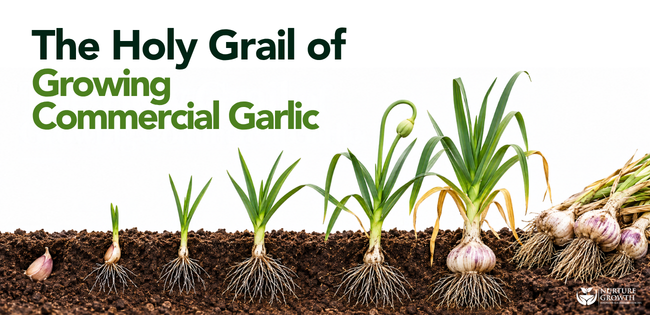
Originally published in 2024 | Updated September 2026
INTRODUCTION
Successful commercial garlic production begins long before the first clove is planted. From selecting high-quality planting stock and preparing healthy soil to managing crop nutrition, irrigation and harvest timing, every decision contributes to bulb development, marketable yield and profitability.
For Ontario garlic growers, fall planting is a critical stage in the production cycle. Establishing a strong root system before winter lays the foundation for vigorous spring growth and healthy bulb development throughout the growing season.
Drawing on Ontario agricultural research, established production practices and Nurture Growth's experience working with commercial garlic growers, this guide explores the essential steps to producing a successful garlic crop, from soil preparation and planting through nutrient management, harvesting, curing and storage.
It also examines the role of beneficial soil microorganisms and how biological inputs can complement conventional fertility programs to support soil health, nutrient availability and crop performance.
Whether you are expanding your garlic acreage or refining an established production program, understanding the relationship between soil health, crop nutrition and effective management is essential to producing high-quality, marketable garlic.
1. SEEDBED PREPARATION

Healthy soil and appropriate seedbed support uniform establishment, root growth and bulb development. Test soil before planting to evaluate pH, organic matter and available nutrients; use results and field history to guide lime, fertilizer and amendment decisions. Garlic generally performs well in fertile, well-drained soil. Correct drainage and compaction limitations before planting, control weeds and prepare a firm seedbed that permits good clove-to-soil contact. Apply compost or appropriately managed manure only where suitable for the field’s nutrient plan, maturity and food-safety requirements.
Beneficial soil microorganisms participate in nutrient cycling and can influence plant nutrient acquisition. A microbial inoculant is not the same as adding measurable amounts of organic matter; see the biological-input section below for its potential role.
2. OBTAINING HIGH-QUALITY PLANTING STOCK
High-quality planting stock is essential for successful commercial garlic production. Garlic is typically propagated from individual cloves rather than botanical seeds, making the health and quality of planting material particularly important. Although garlic can also be propagated from bulbils, these generally require additional growing seasons to produce marketable bulbs.
Commercial growers should purchase planting stock from reputable suppliers and select firm, healthy cloves with intact basal plates. Avoid cloves showing signs of mould, lesions, insect damage, mechanical injury or other abnormalities. Because some pathogens may be present without visible symptoms, growers should also consider the origin, production history and available disease-testing documentation of their planting stock.
Ontario's Garlic Clean Seed Program uses tissue culture and pathogen testing to produce planting material intended to reduce the transmission of garlic pathogens. Clean planting stock can help growers manage disease risks, support crop establishment and maintain the health of future garlic crops. However, growers should verify the current health and testing status of their planting material, as disease-free status cannot be guaranteed solely by its appearance, origin or clean-seed designation. To learn more about CSP, click here.
When selecting garlic for commercial production, growers should also consider cultivar characteristics, regional growing conditions, market demand, bulb size, storage potential and the intended use of the harvested crop.
3. PLANTING DENSITY, DEPTH AND PLACEMENT
Plant population affects bulb size, total yield and the efficiency of field work. Select row and in-row spacing according to cultivar, clove size, machinery, soil conditions and target bulb grade. Record actual planting density and planting-stock weight per acre so yield and cost comparisons are meaningful. Plant cloves with their basal plates downward and pointed ends upward; set planting depth to suit clove size, soil texture, mulch and winter exposure. Verify local planting-depth recommendations before publishing a single universal number.

4. FALL PLANTING AND OVERWINTERING
Fall planting is the standard practice for commercial garlic production in Ontario. Planting garlic in the fall allows cloves to establish a healthy root system before winter and undergo the cold exposure necessary for normal bulb development the following growing season.
The ideal planting period varies depending on the growing zone, soil conditions, cultivar and seasonal weather patterns. Commercial growers should aim to plant early enough to allow sufficient root establishment before the ground freezes, while ensuring that soil moisture and field conditions are suitable for planting.
Garlic may develop above-ground foliage before winter, particularly when planted early or during an extended warm autumn. This growth does not necessarily indicate a problem, as the crop can continue developing normally the following spring.
Recent Ontario research provides further insight into garlic planting dates. A three-year field study conducted in Dashwood, Ontario, between 2022 and 2025 found that earlier fall planting generally improved winter survival and reduced the risk of yield losses associated with delayed planting. However, the earliest planting date did not consistently produce the highest yield. These findings highlight the importance of allowing sufficient time for root establishment while considering local climate, soil conditions and planting-stock quality when determining the appropriate planting window.
Where appropriate, applying clean straw mulch can help moderate soil temperature fluctuations, reduce frost heaving and suppress weeds. Commercial growers should ensure that mulch is free from weed seeds and garlic pests and manage it according to field drainage, soil moisture and spring growing conditions.
Successful overwintering begins with healthy planting stock, appropriate planting timing, good soil drainage and sufficient root establishment before winter.

5. FERTILITY AND NUTRIENT MANAGEMENT
Garlic is a nutrient-demanding crop that requires a well-planned fertility program to support healthy root development, vigorous vegetative growth, bulb formation and marketable yield. For commercial growers, effective nutrient management involves understanding the soil's existing nutrient supply, the crop's nutritional requirements at different growth stages and how growing conditions influence nutrient availability.
Start with Soil Testing and Field History
A successful fertility program begins with comprehensive soil testing before fall planting. Soil analysis provides valuable information about pH, organic matter, phosphorus, potassium and other available nutrients, allowing growers to identify potential deficiencies and develop a field-specific nutrient management plan.
Field history is equally important. Previous crops, crop residues, manure and compost applications, cover crops and past fertilizer use can all influence the soil's nutrient supply. Organic amendments may release nutrients gradually as they decompose, making it important to account for their contribution when determining additional fertilizer requirements.
Garlic performs well in fertile, well-drained soils with a slightly acidic to neutral pH. Maintaining an appropriate soil pH helps support nutrient availability and healthy root development. Where soil testing identifies a need for pH correction, growers should plan amendments sufficiently in advance of planting.
Rather than applying a standard fertilizer blend across every field, commercial growers should develop a nutrient management program based on soil-test recommendations, realistic yield goals and expected nutrient availability throughout the growing season.
Understanding Garlic's Essential Nutrients
Nitrogen (N), phosphorus (P) and potassium (K) are primary macronutrients that support different aspects of garlic growth and development.
Nitrogen (N): Supporting Vegetative Growth
Nitrogen is essential for chlorophyll production, photosynthesis and the development of healthy leaves. During the spring growing season, garlic relies on vigorous foliage development to capture sunlight and produce the carbohydrates needed for subsequent bulb formation.
An inadequate nitrogen supply can restrict plant growth and reduce yield potential. However, excessive nitrogen, particularly late in the growing season, may prolong vegetative growth, delay bulb maturation and negatively affect storage quality.
Commercial growers should determine nitrogen application rates according to soil conditions, organic matter, previous crop management and expected nutrient availability. Where appropriate, split applications can help align nutrient supply with crop demand while reducing the risk of excessive nitrogen application at any one time.
Phosphorus (P): Supporting Root Development and Energy Transfer
Phosphorus plays an important role in energy transfer, cell division and root development.
Healthy root establishment is especially important during fall planting, when garlic begins developing its root system before winter. Adequate phosphorus availability supports normal
root growth and prepares the crop for renewed development the following spring.
Phosphorus availability is influenced by soil pH, soil chemistry and biological activity. Although soil may contain substantial amounts of phosphorus, not all of it is immediately available for plant uptake.
Phosphorus applications should therefore be based on soil-test results rather than automatically included in every fertilizer program.
Potassium (K): Supporting Water Regulation and Plant Development
Potassium supports several physiological processes, including enzyme activation, carbohydrate transport and the regulation of water movement within plants.
Adequate potassium nutrition is important for maintaining normal plant function during periods of active growth and bulb development.
Potassium availability can vary considerably between fields depending on soil texture, mineral composition and previous nutrient management practices.
Commercial growers should evaluate soil potassium levels before planting and address deficiencies according to soil-test recommendations and the crop's expected requirements.
Secondary Nutrients and Micronutrients
In addition to nitrogen, phosphorus and potassium, garlic requires calcium, magnesium, sulfur and essential micronutrients for healthy growth.
Calcium contributes to cell wall development and cellular function, while magnesium is a central component of chlorophyll and is essential for photosynthesis. Sulfur is involved in protein synthesis and the production of sulfur-containing compounds associated with garlic's characteristic flavour and aroma.
Micronutrients, including boron, zinc, iron and manganese, are required in smaller quantities but remain essential for normal plant development.
Secondary nutrients and micronutrients should be managed according to soil-test results, field history, crop observations and appropriate plant tissue analysis. Growers should use established crop recommendations when evaluating potential deficiencies and avoid applying additional nutrients solely on the assumption that more will improve yield.
Applying unnecessary nutrients can increase production costs and, in some cases, create nutrient imbalances that interfere with the availability or uptake of other essential nutrients.
Timing Fertilizer Applications for Maximum Efficiency
The timing of nutrient applications is just as important as the quantity applied. Garlic's nutrient requirements change throughout the growing season, making it essential to coordinate fertilizer applications with crop development.
During fall planting, the priority is establishing a healthy root system before winter. Phosphorus and potassium deficiencies should be addressed during seedbed preparation where soil-test results indicate a need. Large nitrogen applications are generally unnecessary at this stage because much of the crop's active vegetative growth occurs the following spring.
As garlic resumes growth in early spring, nitrogen becomes particularly important for supporting leaf development and building the photosynthetic capacity needed for bulb formation. Growers should determine nitrogen rates according to soil conditions, organic matter, previous crop management and expected nutrient availability.
Where appropriate, split nitrogen applications can help align nutrient supply with crop demand while reducing the risk of excessive nitrogen application at any one time. Nitrogen applications should be completed sufficiently before harvest to avoid encouraging excessive late-season vegetative growth, delayed bulb maturation and reduced storage quality.
During bulb development, the emphasis shifts toward maintaining adequate nutrient and water availability without encouraging unnecessary vegetative growth. Growers should monitor crop condition and avoid corrective fertilizer applications unless a nutrient deficiency has been identified and an application is likely to provide a meaningful benefit.
Integrating Soil Health and Nutrient Availability
Effective nutrient management depends not only on the quantity of nutrients present in the soil but also on their availability to the crop.
Soil moisture, temperature, pH, structure and biological activity all influence nutrient cycling and plant nutrient uptake. Even when soil nutrient levels are adequate, unfavourable growing conditions can restrict root development and reduce the plant's ability to access those nutrients.
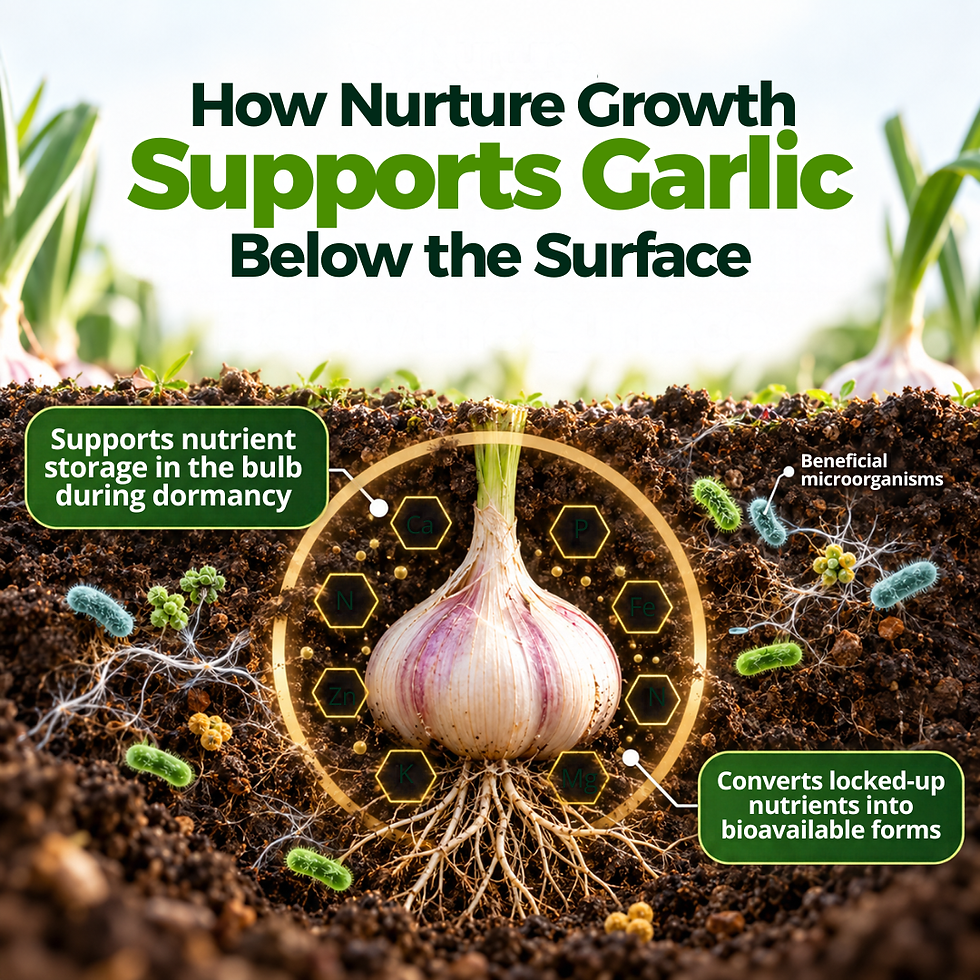
Beneficial soil microorganisms contribute to nutrient cycling through biological processes, including organic matter decomposition and the transformation of certain nutrients into forms that plants may be able to absorb.
Maintaining healthy soil conditions and incorporating appropriate biological inputs can complement a commercial fertility program. However, biological fertilizers should not be assumed to replace essential nutrient inputs without supporting soil assessments and crop-specific performance data.
For commercial garlic growers, the goal is to combine effective nutrient management with practices that support healthy roots, soil biological activity and efficient nutrient acquisition throughout the growing season.
Monitoring Crop Performance and Fertility Costs
A commercial fertility program should be evaluated throughout the growing season and refined using field observations and production records.
Growers should monitor crop establishment, leaf development, plant colour, growth uniformity and bulb development. Where nutrient deficiencies are suspected, soil testing and appropriate plant tissue analysis can help distinguish nutritional problems from disease, moisture stress or other growing conditions.
Because garlic-specific tissue nutrient sufficiency ranges are limited, tissue analysis results should be interpreted carefully alongside soil-test results, field observations and established crop recommendations.
Maintaining records of fertilizer products, application rates, timing, input costs and harvested yield allows growers to assess whether their fertility program is delivering an appropriate return on investment.
Comparing marketable yield, bulb-size distribution and crop quality across growing seasons can help identify opportunities to improve nutrient-use efficiency and reduce unnecessary input costs.
A well-designed fertility program supplies essential nutrients at appropriate rates and growth stages while supporting soil health, crop performance and the long-term profitability of commercial garlic production.
6. BENEFICIAL MICROORGANISMS AND NURTURE GROWTH BULBIS
Beneficial soil microorganisms play an important role in soil health, nutrient cycling and plant development. Different groups of microorganisms perform specific biological functions that can support nutrient availability and plant growth throughout the growing season.
Nitrogen-fixing bacteria convert atmospheric nitrogen into forms that can enter the soil's biological nitrogen cycle. Phosphorus-solubilizing microorganisms help release phosphorus from certain soil compounds, while potassium-mobilizing microorganisms can improve the availability of potassium from soil minerals. Arbuscular mycorrhizal fungi form beneficial associations with plant roots, extending their ability to access water and nutrients, particularly phosphorus, under suitable soil conditions.
Nurture Growth Bulbis is a liquid biological input designed to complement existing soil fertility and crop nutrition programs. Its beneficial microorganisms are intended to support biological processes in the root zone, including nutrient cycling and plant nutrient acquisition. By incorporating biological inputs into their existing fertility programs, commercial garlic growers can support soil biological activity and create favourable conditions for healthy root development and crop growth.
The effectiveness of biological inputs depends on several factors, including soil conditions, temperature, moisture, microbial viability and application practices. Growers should integrate biological fertilizers with soil testing, appropriate nutrient management, irrigation and established agronomic practices rather than relying on biological inputs as a replacement for essential crop nutrients.
For commercial garlic growers, evaluating biological inputs through field trials and monitoring crop performance can help determine their potential contribution to root development, nutrient-use efficiency, bulb quality and marketable yield under specific growing conditions.
By combining healthy soil, balanced crop nutrition and beneficial microbial activity, commercial garlic growers can build a more integrated approach to crop management that supports soil health and long-term agricultural productivity.
7. INTEGRATING BIOLOGICAL INPUTS INTO COMMERCIAL GARLIC PRODUCTION
Successful commercial garlic production requires an integrated crop management approach that considers soil health, nutrient availability, irrigation, crop protection and the timing of agricultural inputs.
Before planting, growers should review their soil-test results, field history and crop nutrient requirements to develop an appropriate input program. Fertilizer applications should address identified nutrient needs, while biological inputs can be incorporated to support soil biological activity, nutrient cycling and plant nutrient acquisition.
The timing of applications is particularly important. During fall planting, growers should focus on establishing a healthy root system and preparing the crop for overwintering. As garlic resumes growth in the spring, nutrient and water availability become increasingly important for supporting vegetative growth and subsequent bulb development.
Biological inputs, including Nurture Growth Bulbis, can be incorporated into an existing fertility program where their intended functions align with the crop's development stage and growing conditions. For example, applying beneficial microorganisms near the developing root zone during planting may help establish microbial activity in the surrounding soil, provided the application is consistent with the product's approved directions.
Subsequent applications should be based on crop requirements, soil conditions and the product's validated application protocol rather than a fixed application schedule.
Growers should also consider product compatibility, application methods, irrigation practices and the interaction between biological inputs and other agricultural products when developing their crop management programs.
An effective commercial garlic input program combines appropriate nutrient management, healthy soil conditions and well-timed applications to support crop performance, bulb quality and marketable yield.
8. IRRIGATION AND MOISTURE MANAGEMENT
Adequate soil moisture is essential for successful garlic production, supporting root establishment, nutrient uptake, vegetative growth and bulb development. For commercial growers, effective irrigation management involves maintaining sufficient moisture throughout the growing season while avoiding prolonged soil saturation, which can restrict root growth and create conditions favourable to disease.
Garlic is particularly sensitive to moisture stress during active spring growth and bulb development. Insufficient water during these critical stages can limit plant growth, reduce bulb size and negatively affect marketable yield.
As a general guideline, Ontario's garlic production recommendations indicate that most soils require approximately 2.5 cm (1 inch) of water per week during the growing season. Sandy, well-drained soils may require 5 cm (2 inches) or more during hot, dry conditions. These amounts should be adjusted to account for rainfall, soil moisture, temperature and crop development rather than treated as fixed irrigation requirements.
Commercial growers should monitor soil moisture regularly and schedule irrigation according to crop demand and field conditions. Irrigating during the morning or early afternoon allows sufficient time for foliage to dry before nightfall, helping reduce conditions favourable to foliar diseases. Where possible, irrigation systems should deliver water uniformly while minimizing runoff, excessive soil saturation and unnecessary water use.
As garlic approaches maturity, irrigation should be discontinued at an appropriate stage to allow the soil to dry before harvest. This helps facilitate harvesting, reduce soil adhering to bulbs and minimize staining and deterioration of the protective outer wrappers. Growers should base the timing of their final irrigation on bulb maturity, soil conditions, weather and the anticipated harvest date rather than following a fixed calendar schedule.
Effective irrigation management supports healthy plant development, maintains bulb quality and helps commercial garlic growers maximize marketable yield while minimizing water waste and postharvest losses.
9. DISEASE PREVENTION AND PLANTING STOCK HEALTH
Managing garlic diseases begins with prevention. Planting infected cloves can introduce pathogens into production fields, potentially affecting crop establishment, bulb development, marketable yield and the health of future planting stock.
Commercial growers should pay particular attention to stem and bulb nematode and white rot, two significant concerns in garlic production. Stem and bulb nematode can be introduced through infested planting material and may damage developing plants and bulbs. White rot can also be introduced through contaminated planting stock, soil or equipment, and its survival structures can persist in the soil for many years, creating long-term production challenges.
Other potential concerns include Fusarium basal rot and additional fungal, bacterial and viral diseases that may affect garlic during production or storage.
An effective disease-prevention program should include sourcing healthy planting stock, reviewing field disease history, implementing appropriate crop rotations, cleaning equipment and monitoring crops regularly throughout the growing season. Growers should also avoid moving potentially contaminated soil or planting material between production fields.
Where infection is suspected, seek appropriate laboratory testing to identify the potential pathogen and follow current provincial crop protection recommendations. Visual inspection alone may not be sufficient to determine the presence or absence of certain diseases.
When selecting planting stock for subsequent growing seasons, growers should assess bulb health, storage performance and the disease history of the original crop. Maintaining records of planting-stock origin, field location and crop performance can help identify potential production risks and support informed planting decisions.
Investing in high-quality planting stock and implementing effective disease-prevention practices can help commercial garlic growers reduce production risks, protect marketable yield and maintain healthier crops over successive growing seasons.
10. SCAPE REMOVAL
Scape removal is an important management practice for hardneck garlic varieties. Garlic scapes are the flowering stalks that emerge during the growing season. If left intact, they compete with developing bulbs for the plant's resources, potentially reducing bulb size and marketable yield.
Removing scapes at the appropriate stage allows the plant to redirect more of its resources toward bulb development. Commercial growers should monitor scape emergence and plan removal shortly after the scapes curl, before they straighten. Timely removal can help support the development of larger, more uniform bulbs.
Maintaining healthy foliage is essential because garlic leaves are responsible for photosynthesis and the production of carbohydrates needed for bulb growth. Whether removing scapes manually or mechanically, growers should take care to minimize damage to functional leaves, as excessive leaf removal can reduce bulb development and compromise the benefits of scape removal.
For commercial operations, scape removal requires consideration of labour availability, equipment efficiency and overall production costs. Where suitable markets exist, harvested scapes can also provide an additional revenue opportunity, allowing growers to maximize the economic value of their garlic crop.
Timely scape removal, combined with careful handling and effective labour management, can support bulb development, improve marketable yield and create opportunities for additional farm revenue.
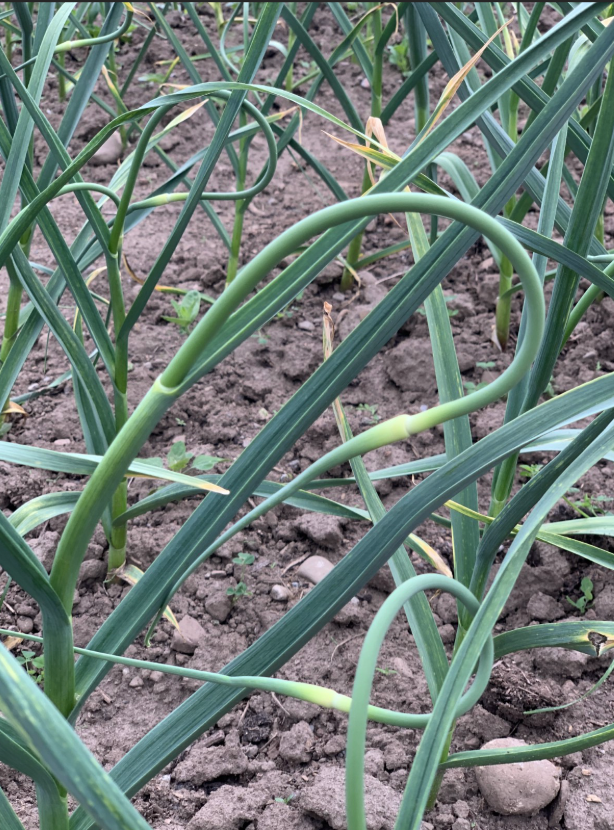
Source: Green Machine Farm
11. HARVESTING
Harvesting at the appropriate stage is essential for maximizing garlic bulb quality, marketable yield and storage potential. The optimal harvest period varies by growing zone, cultivar, planting date and seasonal weather conditions. Growers should monitor crop development and field conditions rather than relying on a fixed harvest date.
As garlic approaches maturity, the lower leaves begin to yellow and dry. As a general guide, growers may begin assessing harvest readiness when approximately 30–50% of the leaves have died back. However, the appropriate harvest stage varies by cultivar and growing conditions. Inspect representative bulbs from different areas of the field to confirm that they have reached adequate maturity while retaining sufficient protective outer wrappers.
Harvesting too early may result in immature bulbs with reduced storage potential, while delaying harvest can cause the protective wrappers to deteriorate or bulbs to split, affecting marketability and storage quality. Commercial growers should carefully monitor crop maturity to identify the appropriate harvest window and minimize potential losses.
During harvesting, minimize bruising, cuts and damage to the protective wrappers. Harvested bulbs should be moved promptly out of direct sunlight and transferred to a suitable curing area to preserve quality and reduce postharvest deterioration.
For commercial operations, harvesting methods should be selected based on acreage, labour availability, equipment costs, harvesting efficiency and their potential impact on bulb quality.
By monitoring crop maturity and adjusting harvest timing to local growing conditions, commercial garlic growers can preserve bulb quality, reduce postharvest losses and maximize marketable yield.
12. CLEANING AND CURING
Proper cleaning and curing are essential for preserving garlic quality, extending storage life and minimizing postharvest losses. For commercial growers, careful handling immediately after harvest helps protect the bulbs, maintain their marketability and reduce the risk of deterioration during storage.
After harvesting, gently remove excess soil while preserving the protective outer wrappers. Avoid unnecessary handling or mechanical damage, as exposed or bruised bulbs are more susceptible to deterioration. Garlic intended for long-term storage should generally not be washed unless the operation has an established washing and drying procedure that meets its market and food-safety requirements.
Once excess soil has been removed, transfer the bulbs promptly to a well-ventilated curing area protected from direct sunlight, excessive moisture and adverse weather conditions. Proper curing allows excess moisture to evaporate from the bulbs while the necks and protective outer wrappers dry, helping preserve bulb quality and reduce the risk of postharvest decay.
Commercial growers should monitor temperature, relative humidity and airflow throughout the curing process to promote uniform drying. Avoid overcrowding bulbs or stacking them in ways that restrict ventilation, as trapped moisture can create conditions favourable to fungal growth and deterioration.
Curing time varies depending on bulb size, harvest conditions, environmental factors and the efficiency of the curing facility. Rather than relying on a fixed curing period, growers should assess the condition of the bulbs to determine when curing is complete. Properly cured garlic should have dry, papery outer wrappers, a constricted, dry neck and sufficiently dry internal stem tissue.
Once curing is complete, bulbs should be graded and transferred to storage conditions appropriate for their intended market, whether for immediate sale, longer-term marketing or use as planting stock. Unlike curing, which focuses on removing excess moisture, storage requires maintaining suitable environmental conditions to preserve bulb quality and minimize sprouting, dehydration and decay.
Effective cleaning, curing and postharvest handling help preserve garlic quality, reduce storage losses and maximize the marketable value of the harvested crop.
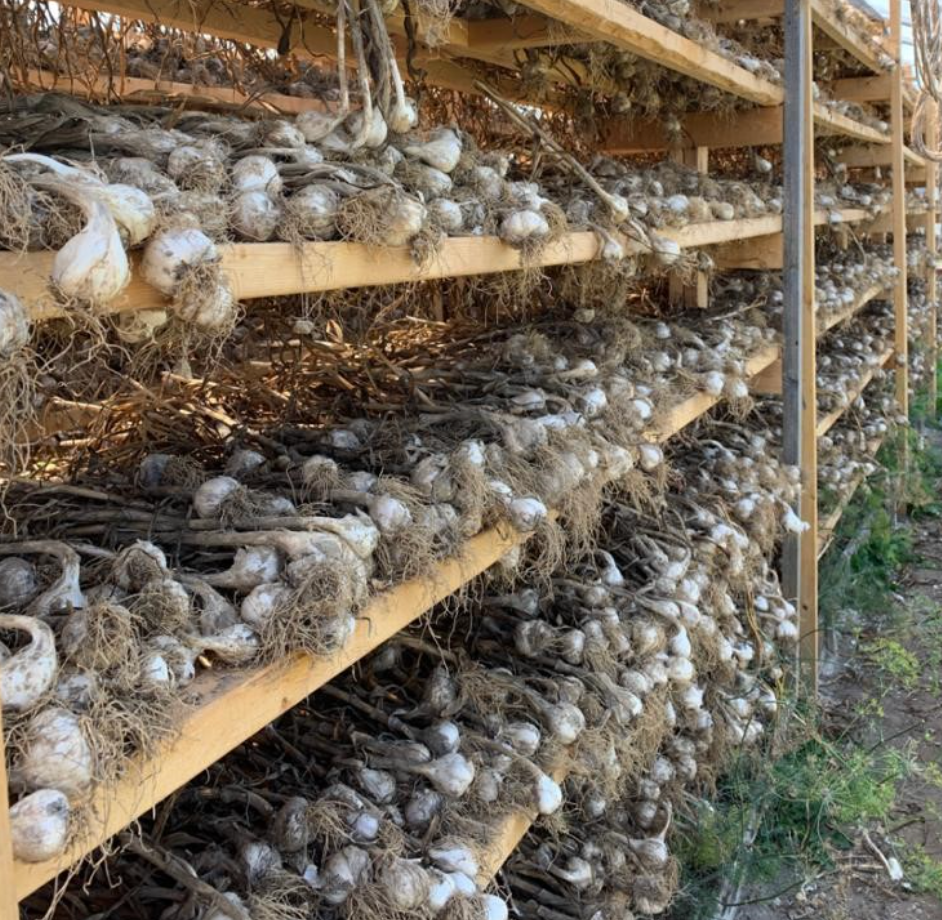
Source – Food 4 Life Market Garden
13. Storage and Marketable Quality
Proper storage is essential for maintaining garlic quality, extending shelf life and minimizing postharvest losses. Once curing is complete, garlic should be stored under conditions appropriate for its intended use, whether for immediate sale, long-term marketing or use as planting stock. Effective storage management helps preserve the quality and commercial value of the harvested crop.
Commercial growers should select healthy, adequately cured bulbs that are free from visible disease, mechanical damage and excess moisture. Bulbs should be handled carefully to preserve their protective outer wrappers, which help reduce moisture loss and protect cloves from physical damage and deterioration during storage.
Temperature, relative humidity and ventilation are critical factors in maintaining garlic quality. Storage conditions should be selected according to the cultivar, intended use and anticipated storage duration. Adequate airflow helps prevent moisture accumulation, while appropriate temperature and humidity management can help minimize premature sprouting, dehydration, mould development and postharvest decay.
Garlic intended for consumption may require different storage conditions from garlic reserved for planting. Commercial growers should follow appropriate postharvest recommendations for each intended use, as storage temperature and duration can influence bulb dormancy, sprouting and subsequent crop establishment. Planting stock should generally be stored as whole bulbs until shortly before planting to reduce the risk of clove deterioration.
Throughout the storage period, growers should inspect garlic regularly for signs of sprouting, mould, decay, moisture loss and other quality changes. Affected bulbs should be separated from marketable stock, and any recurring storage problems should prompt a review of temperature, humidity, ventilation and handling practices.
Storage performance is also an important consideration when evaluating the profitability of commercial garlic production. In addition to recording total harvested yield, growers should track bulb-size distribution, grading results, marketable pack-out, storage losses and the quantity of garlic ultimately sold. Comparing these results across growing seasons can help identify opportunities to improve storage practices, reduce waste and maximize returns.
Effective storage management protects the investment made throughout the growing season by preserving bulb quality, reducing postharvest losses and maximizing the commercial value of the harvested crop.
14. Evaluating commercial returns
Assess the value of any new practice, including a biological input, by comparing appropriately managed treated and untreated areas under similar field conditions. Track application rates and costs, harvested yield, bulb grade distribution, marketable pack-out, storage performance and net returns per acre. Where trial data are preliminary, state that clearly and avoid presenting findings from other crops as established garlic results.

Source – Farmers who used Nurture Growth, Food 4 Life Market Garden & Good Day Garlic
Building a Stronger Foundation for Commercial Garlic Production
Successful commercial garlic production begins long before planting and extends well beyond harvest. Every decision, from selecting healthy planting stock and preparing the soil to managing nutrients, irrigation, crop health and postharvest storage, contributes to bulb quality, marketable yield and profitability.
Building a productive garlic crop requires more than applying fertilizers. It requires an integrated approach that combines sound agronomic practices, healthy soil and effective nutrient management. Beneficial microorganisms can play an important role in this system by supporting soil biological activity, nutrient cycling and plant nutrient acquisition.
At Nurture Growth, we believe that the future of agriculture begins beneath the surface. By combining microbial innovation with established farming practices, we aim to help growers build healthier soils and support more productive, resilient agricultural systems.
Discover how Nurture Growth's biological technology can complement your existing garlic production program. Explore our application guidelines and ongoing garlic field programs to learn how beneficial microorganisms can support your growing operation.
Disclaimer: This article is provided for educational and informational purposes only. Crop management practices, fertility programs, application rates and growing conditions may vary by crop, location, soil type and production system. Growers should consult a qualified crop specialist, agronomist or other agricultural professional before making changes to their production practices.
About the Blogger:

Le is the CEO and Co-founder of Nurture Growth Bio Fertilizer. She is passionate about sustainable agriculture and has an extensive orchid and rare plant collection.
To learn more about Le, visit her LinkedIn Page.
References:
Cantwell, M. (2000, August). Garlic. University of California, Davis, Postharvest Research and Extension Center. https://postharvest.ucdavis.edu/produce-facts-sheets/garlic
Cranmer, T. (2025, October 10). The advantage of clean garlic planting stock. ONvegetables. https://onvegetables.com/2025/10/10/cleanseed/
Cranmer, T. (2026, August 10). Garlic clean seed available. ONvegetables. https://onvegetables.com/2026/08/10/garlic-clean-seed/
Cranmer, T. (2026, August 18). When is the best time to plant garlic? ONvegetables. https://onvegetables.com/2026/08/18/when-is-the-best-time-to-plant-garlic/
Garlic Growers Association of Ontario. (n.d.). Clean seed program. https://www.garlicgrowersofontario.com/seed-types
Ontario Ministry of Agriculture, Food and Agribusiness. (n.d.). Publication 839: Guide to vegetable production in Ontario. Government of Ontario. https://www.ontario.ca/page/publication-839-guide-vegetable-production-ontario
Government of Ontario. (n.d.). Garlic production. https://www.ontario.ca/page/garlic-production
Government of Ontario. (2024, June 27). Stem and bulb nematode management in garlic. https://www.ontario.ca/page/stem-and-bulb-nematode-management-garlic


Comments